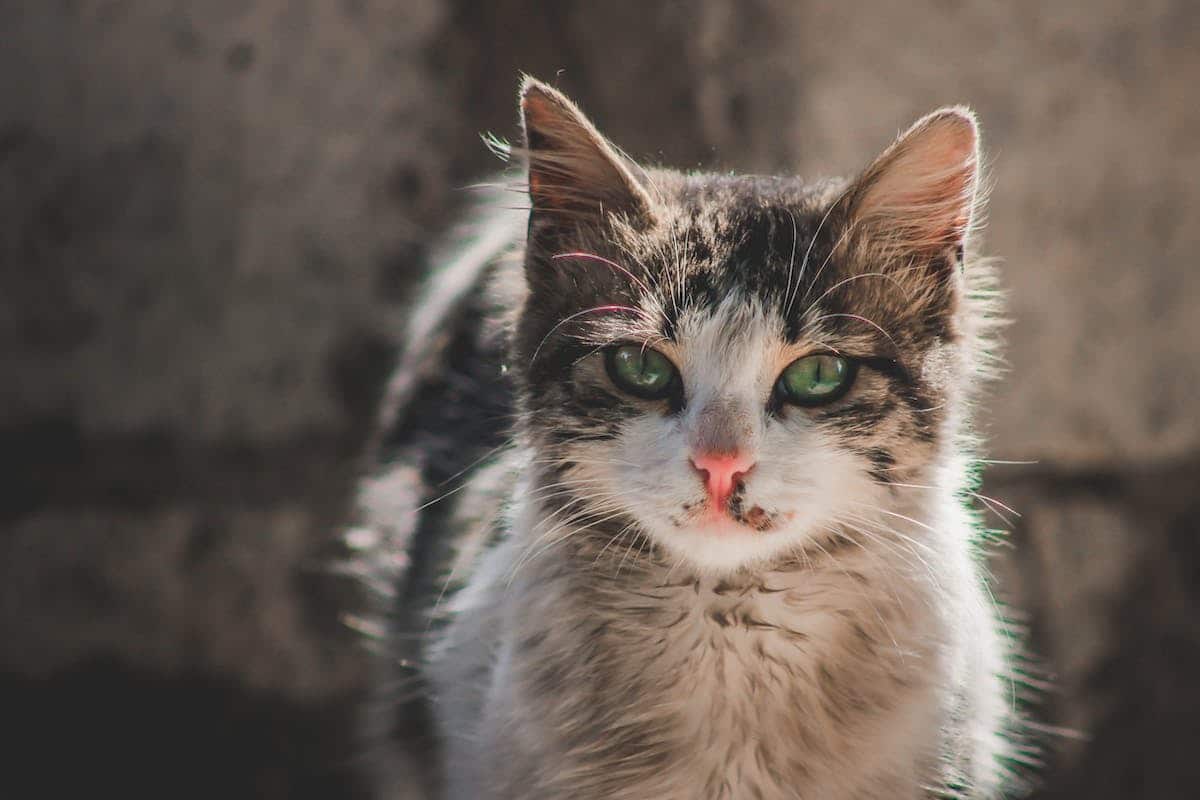
In the vast animal kingdom, felines hold a unique place, evoking both admiration and respect for their incredible agility and speed. These creatures, endowed with unmatched precision and coordination, are a true marvel of nature. From the snow leopard, capable of scaling dizzying heights, to the cheetah, recognized as the fastest land mammal, these animals demonstrate extraordinary adaptability in the face of environmental challenges. Not to mention the graceful and majestic domestic cats, which, despite their small size, are nonetheless impressive in their agility.
The exceptional agility of felines: a major asset for their survival
The unparalleled agility of felines is a characteristic that has fascinated humans since time immemorial. This ability to move with such ease and precision is not a matter of chance, but rather the result of a complex and specific evolution of their morphology. The size of felines plays a crucial role here.
Indeed, whether they are small like domestic cats or large like African lions, all share a common body structure that promotes agility. Their elongated and flexible bodies are supported by four robustly muscled limbs ending in sharp retractable claws. This optimized design allows felines to perform all sorts of physical feats with brilliance: leaping several meters, climbing trees with agility, or sneaking stealthily to approach their prey.
The size of felines directly influences their athletic capabilities by adapting these attributes to different environments and hunting styles. For example, the African wildcat has developed a smaller body to better conceal itself in dense vegetation, while the leopard must possess enough strength in its forelimbs to hoist its prey to safety in trees despite its substantial weight.
Moreover, another fascinating aspect concerning the exceptional agility of these creatures is related to the highly advanced vestibular system they possess. Responsible for balance and helping to coordinate their movements, it allows them to always land on their feet when they fall and to make high-speed turns without losing balance.
Thus, the agility and speed of felines are not solely a matter of brute strength or pure speed, but rather a symbiosis of various anatomical characteristics, of which the size of felines is a fundamental aspect. Through this analysis, we discover how these magnificent creatures are the product of an evolution perfectly adapted to their wild and predatory lifestyle.

The anatomical adaptations of felines: a key to their incredible speed
In the quest for speed, felines have also developed specific anatomical adaptations to optimize their performance. Their musculature is finely tuned and allows them to generate explosive power when they launch into full speed. The muscles of the hind limbs, in particular, are extremely developed and enable felines to propel their bodies with impressive force.
Another characteristic that contributes to the speed of felines is their flexible and supple spine. This unique structure acts like a spring that stores energy when they crouch before leaping at their prey. This gives them additional propulsion at the moment of the jump, thus increasing their execution speed.
In addition to an adapted musculature and a flexible spine, the hind legs of felines are equipped with elastic tendons known as calcaneal tendons or ‘hock tendons’. These tendons function like elastic cords, storing kinetic energy when the feline flexes its limbs during movement before releasing it suddenly during the full extension of the hind limb while running. This complex mechanism significantly amplifies the propulsive force exerted by the muscles.
It should not be forgotten that these predators also possess a keen vision that plays a crucial role in their rapid and precise movements. Their eyes are positioned at the front of the skull, providing them with binocular vision and enhanced depth perception, essential for accurately assessing distances when moving quickly.
Felines have developed remarkable anatomical adaptations over the course of evolution to ensure their exceptional agility and speed. Their fine yet powerful musculature, flexible spine, and elastic calcaneal tendons contribute to amplifying their physical performance, while their keen vision ensures perfect coordination during their rapid movements. This combination of anatomical adaptations makes felines a perfect model of physical efficiency in the animal kingdom.
The hunting of felines: a demonstration of unparalleled speed and agility
Hunting is a captivating demonstration of the speed and agility of felines, revealing their mastery of movement. These predators exhibit incredible precision in their attacks, as well as a keen sense of anticipation to capture their prey with formidable efficiency.
When they spot a potential target, felines use their exceptional agility to approach stealthily without alerting their prey. Their supple and muscular bodies move silently, gracefully navigating through natural obstacles such as tall grass or trees. They can instantly modify their trajectory while running to avoid any unforeseen obstacles.
Once close enough to their prey, felines unleash all their explosive power to pounce on it with lightning speed. Thanks to their powerful muscles and flexible spine, they suddenly leap forward in an impressive jump that leaves little chance for their target.
The claws are also a key element during feline attacks. Their sharp claws emerge at the right moment to firmly grasp their prey and prevent it from escaping during the ensuing struggle. This technique allows them to maintain total control over the situation even when the resistance is intense.
The speed and agility of felines are undeniable assets in their quest for food. Their ability to move quickly and with great precision gives them a significant competitive advantage over their prey, which often cannot compete with this deadly combination of strength, intelligence, and grace.
Ultimately, hunting is a true demonstration of the physical supremacy of felines in the animal kingdom. Their mastery of movement, combining lightning speed and remarkable agility, makes them formidable predators that perfectly embody the idea of undeniable natural prowess.
Agility: a crucial element for the survival of felines in the wild
In the wild, agility is an essential quality for felines. It allows them to adapt to different situations and face various challenges successfully. When a feline encounters a larger predator or a particularly fast prey, its agility provides a crucial advantage.
One of the reasons why agility is of paramount importance for the survival of felines lies in their constant need to find food. Predation being their primary source of sustenance, they must be able to hunt effectively to survive. Speed and agility thus increase their chances of success when they set out in search of prey.
The natural environment in which felines operate can be extremely physically demanding. Rugged terrain, steep trees, or turbulent waterways are just some of the obstacles these animals face daily. Their remarkable agility offers them great adaptability in the face of these challenging conditions.
The competition among individuals is intense among felines, particularly regarding territory and reproduction. In these contexts as well, agility plays a crucial role. Indeed, it gives felines an increased ability to escape from other predators or potential rivals while maintaining solid territorial control.
The agility of felines is also essential for their ability to escape the dangers that threaten them. When they feel threatened, they can use their speed and agility to flee quickly or hide in hard-to-reach places. This quick and fluid reaction to danger is a valuable asset for ensuring their survival.
Agility is a key characteristic of the evolutionary success of felines. It plays a crucial role in their hunting activities, their adaptation to different environments, as well as in competitive or dangerous situations. Felines are undeniably among the most agile creatures in the animal kingdom, which adds to the fascination surrounding these fast and graceful predators that continue to amaze with their beauty and incredible physical performances.
Felines hold speed records in the animal kingdom
In the animal kingdom, felines are among the holders of impressive speed records. Among them, the cheetah (Acinonyx jubatus) stands out for its ability to reach breathtaking speeds. Considered the fastest land animal in the world, it can run up to 100 kilometers per hour in just a few seconds.
The cheetah has a specific morphology that grants it this incredible speed. Its long, slender limbs act as an efficient suspension system, reducing wind resistance when it runs at high speed. Its spine is extremely flexible, allowing it to extend its body to lengthen its strides.
Another feline known for its speed is the leopard (Panthera pardus). Although it cannot compete with the cheetah’s speed over short distances, it compensates by being an endurance runner capable of maintaining a steady pace for an extended period. Estimates suggest that the leopard can reach about 58 kilometers per hour when actively pursuing prey.
Regarding the large felines of South America, the jaguar (Panthera onca) also deserves an honorable mention in the category of fast predators. With considerable muscular power and remarkable agility, this animal can move quickly both on land and in water.
Among domestic felines as well, some individuals can boast impressive performances. Domestic cats (Felis catus) and large felines such as the lion (Panthera leo) or tiger (Panthera tigris), although not as fast as their wild cousins, are nonetheless capable of executing impressive sprints when stimulated.
It is important to note that these speed records vary from individual to individual based on numerous factors, including breed, age, physical condition, and environmental circumstances. These physical feats testify to the evolutionary power of felines, which have developed exceptional agility and speed over time to meet the demands of their lifestyle.
Felines hold astonishing speed records in the animal kingdom. The cheetah reigns supreme with its unique ability to reach staggering speeds in just a few seconds. Leopards and jaguars also follow with their own remarkable athletic skills. Even among more familiar domestic felines, we can witness surprising agility when they spring into action. These performances perfectly illustrate why felines are considered among the most extraordinary and fascinating creatures in the animal world.
The extraordinary combination of agility and speed in felines: a true natural feat
The extraordinary combination of agility and speed in felines is the result of an evolution that has unfolded over millions of years. Felines have developed exceptional morphological and physiological adaptations to become formidable predators. Their ability to move quickly allows them not only to hunt effectively but also to flee from potential dangers.
But how can we explain this extraordinary agility? It all begins with the very structure of the feline body. Their limbs are long and muscular, providing them with a great range of motion. They also possess a flexible spine, which acts like a spring, allowing them to extend their strides when running.
Felines have keen vision and a well-developed nervous system that enables them to accurately assess the distance between themselves and their potential prey or predators. These sharp senses, combined with their natural agility, make felines true precision machines in motion.
It should not be forgotten that training also plays a crucial role in the development of athletic abilities in wild felines. From a young age, they learn to run, jump, and climb by constantly practicing in their natural environment.
The extraordinary combination of agility and speed in felines is a marvel of nature. The cheetah, leopard, jaguar, and even our domestic friends possess unique physical characteristics that make them truly remarkable creatures in terms of athleticism. Their agility and speed are a source of admiration for scientists and a fascinating spectacle for all who have the chance to observe them in their natural element.
As we continue to study these incredible animals, there is still much to discover about their extraordinary athletic capabilities. One thing is certain: felines are masters of agility and speed, reminding us of how complex and astonishing nature can be.