Preserving one’s health on a daily basis requires meeting conditions that most guides take for granted. Housing, the workplace, access to healthcare, and the digital environment weigh as heavily on health status as the contents of one’s plate or the number of daily steps. For several years, we have observed a shift in prevention policies towards an approach that targets environments rather than just individual behaviors.
Digital Determinants of Health: A Blind Spot in Traditional Advice
The concept of digital determinants of health is beginning to gain traction in French medical literature. Prolonged screen time, constant notifications, and static postures in front of a laptop placed on a coffee table exacerbate musculoskeletal disorders, disrupt sleep, and contribute to chronic stress.
We recommend treating the digital environment as a health parameter on par with diet. Setting notification-free periods, physically separating the workspace from the rest area, and limiting screen use in the hour before bedtime are levers whose effectiveness surpasses that of simple dietary advice when the underlying issue is cognitive overload.
The current debate also focuses on personalized prevention through artificial intelligence. Recent proposals recommend using health data and digital tools to refine prevention pathways. The identified risk: an “algorithmic divide” where these services would primarily benefit those with sufficient financial means or digital skills.
To delve deeper into these topics, several resources address health on Ce Qu’il Faut Savoir with complementary insights on prevention practices.
Health at Work: When the Workplace Dictates Habits
Recent guidelines on prevention explicitly incorporate occupational health. The assessment of psychosocial risks, the ergonomics of workstations, and employee training are no longer merely regulatory obligations but a full-fledged public health focus.

The involvement of employee representatives in prevention actions is among the structuring recommendations. In practical terms, this means that stress management, the prevention of issues related to sedentariness, and the organization of schedules no longer rely solely on the individual employee’s will.
Moreover, the lack of physical activity is not limited to the absence of sports. A fully motorized commute, an open space without the possibility to walk, and lunch breaks spent in front of a screen: these structural constraints often negate the benefits of a yoga session or a run on the weekend. We observe that effective prevention programs act on work organization, not just on individual motivation.
Preserving Health Despite Constrained Living Conditions
The central question that popular articles avoid: how to apply prevention recommendations when housing is cramped, the food budget is tight, and access to healthcare is limited by geography or appointment delays?
As long as prevention relies on a behavioral model (“eat better, move more, sleep well”), it produces uneven results. Recent reports warn of the deficit in health prevention in France and call for a change in model. The key idea: act on living environments rather than just individual choices.
Some concrete levers deserve to be identified:
- Urban planning, with accessible green spaces and secure bike paths, directly influences the level of physical activity of a population, regardless of each resident’s will.
- The quality of indoor air in social or old housing is a respiratory health factor often overlooked by “daily well-being” guides.
- Access to quality food offerings in neighborhoods lacking local shops weighs more than any individual nutritional advice.
This approach does not absolve personal responsibility, but it places “good habits” in their real context. An employee with irregular hours in a noisy home does not have the same leeway as a manager working from home with a garden.
Sleep and Stress Management: Going Beyond Generic Recipes
Recommendations on sleep circulate endlessly in health media. We propose a more operational angle: identify the specific disruptors in one’s own environment before seeking standardized solutions.
Nocturnal noise and artificial light are the two primary factors to address. Before investing in melatonin-based supplements or changing bedtime schedules, soundproofing a bedroom or installing blackout curtains yields measurable results on sleep quality.
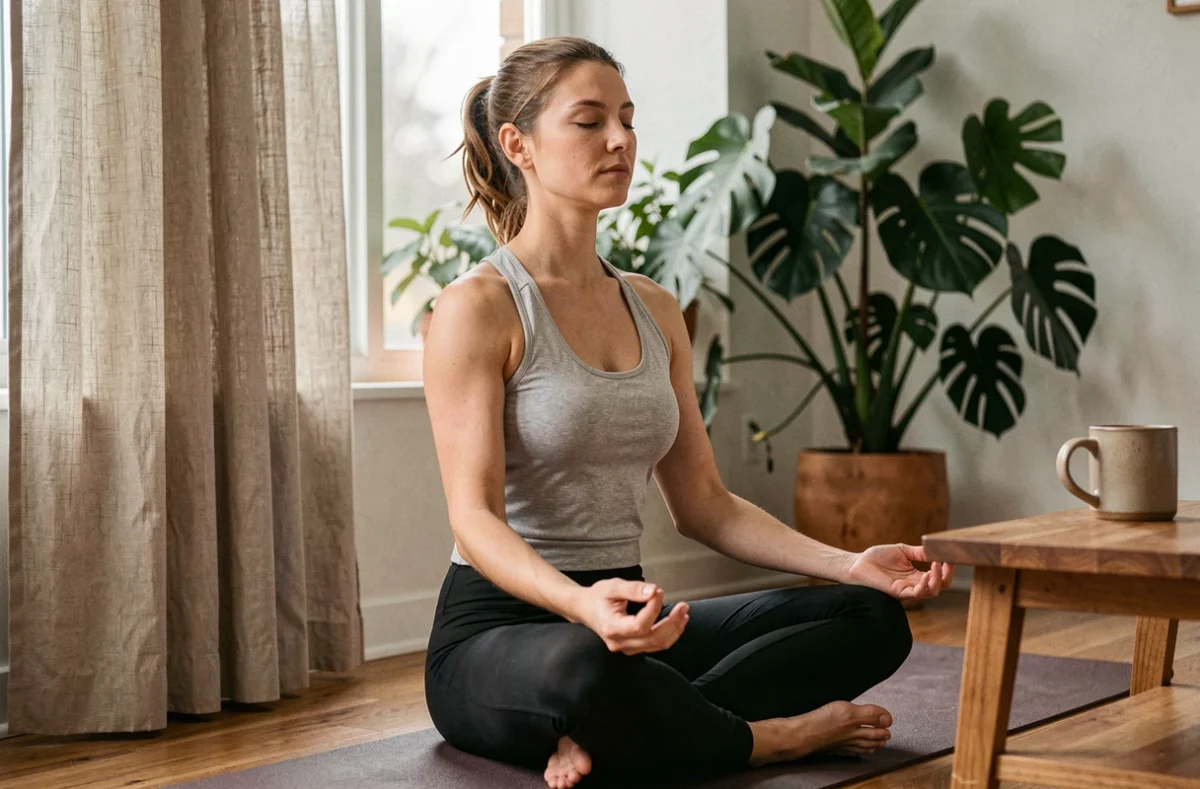
Regarding stress management, practices like yoga or meditation have documented benefits. Their limitation lies in the fact that they intervene downstream of the problem. If the source of stress is a managerial conflict, structurally excessive workload, or financial insecurity, no relaxation technique is sufficient. Sustainable stress prevention involves identifying and addressing its cause, not just managing its symptoms.

Vaccinations and Screenings: Persistent Blind Spots
Vaccination coverage for adults remains uneven in France. Seniors, pregnant women, and professionals in healthcare facilities: certain target populations remain below the objectives set by health authorities.
Regular screening is a pillar of prevention that is too often postponed, particularly by those who struggle to find medical time in a busy professional schedule. Delays in accessing a primary care physician exacerbate this phenomenon in underserved areas.
Daily health is not reduced to a list of individual actions. It depends on an ecosystem that includes work, housing, access to healthcare, and the digital environment. Acting on these determinants produces more lasting effects than merely accumulating good resolutions.