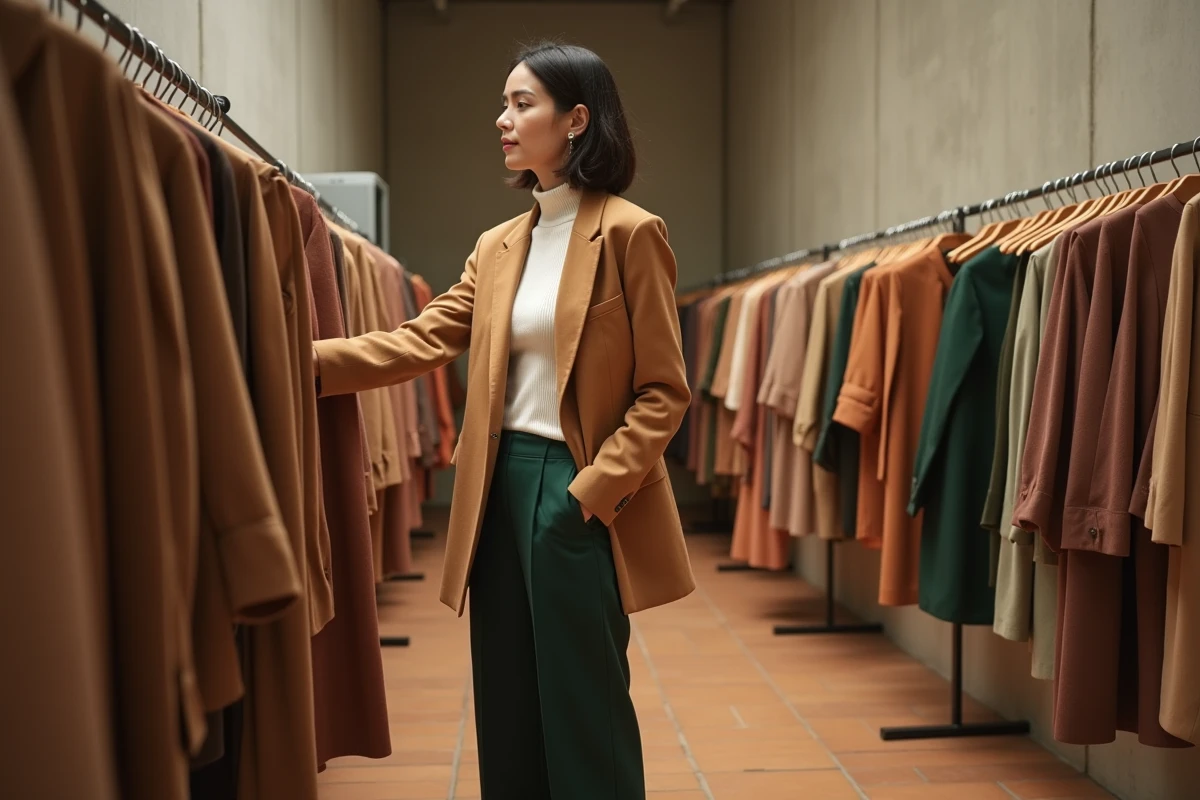
Fashion news is read through runways, social media, and store windows. Each season brings its share of new colors, materials, and silhouettes, but a fundamental movement is changing the game: the rejection of ultra-fast cycles in favor of a more stable and thoughtful wardrobe. Understanding current trends means first distinguishing between fleeting visual noise and what deserves a lasting place in a wardrobe.
Micro-trends and trendless wardrobe: two opposing visions of style
A micro-trend refers to a fashion craze whose lifespan is measured in weeks, sometimes days, primarily fueled by TikTok. A pattern, a cut, or an accessory explodes, saturates news feeds, and then disappears before even reaching physical stores.
In response to this pace, content creators like Alyssa Beltempo advocate for the concept of a trendless wardrobe, a wardrobe built without following ephemeral trends. On the r/femalefashionadvice and r/malefashionadvice forums, recurring discussion threads encourage building a personal style that is impervious to the cycles of social media.
Fashion trends and current styles are easier to follow when one can sort between mass effect and real evolution of the wardrobe; this is exactly the monitoring work that HyperScoop’s fashion section offers throughout the seasons.
The real divide lies here: adopting every new trend at the risk of renewing one’s wardrobe every month, or selecting a few strong pieces each season and integrating them into a stable foundation. Both approaches coexist, but the latter is gaining ground among consumers weary of fast fashion.

Key colors and materials from spring to autumn
Seasonal palettes remain the first concrete reference for following fashion news. In spring, pastel tones and off-whites dominate women’s ready-to-wear collections. Summer extends this clarity by adding saturated touches (bright red, cobalt blue) to solid pieces.
In autumn and winter, materials take over from colors as trend markers. Boucle wool, corduroy, and thick knits return each year, but their treatment evolves: looser cuts, raw finishes, visible fiber blends.
Three criteria for evaluating a trendy material
- The origin of the fiber and its traceability, a central point since new European requirements on environmental claims
- The weight and durability, because a piece that pills after three washes does not deserve the label of sustainable trend
- The reparability of the garment, a criterion pushed by the Green Claims directive that requires brands to prove their commitments
Rather than chasing the color of the season, checking these three points allows you to identify pieces that will remain wearable well beyond a single autumn or spring.
European regulation and its effect on fashion trends
The Digital Services Act (DSA) and the Green Claims directive are changing the way brands communicate about their collections. The terms “eco-friendly” or “sustainable” can no longer be used without factual evidence to support them. Marketing services now prioritize verifiable mentions: certification, fiber origin, reparability index.
For consumers, this regulatory framework changes the reading of trends. A dress presented as “green” must rely on concrete data. Labels become a tool for choice, not just compliance.
This tightening also pushes fashion media to adjust their vocabulary. Style advice and look selections are gradually incorporating information about the composition, origin, and actual durability of the recommended pieces.

Building a seasonal look without succumbing to fleeting trends
The principle is based on a simple idea: a foundation of neutral pieces complemented by two or three seasonal additions. This foundation includes basics whose cuts correspond to the individual’s morphology, not to the current trendy silhouette.
Women’s pieces to consider by season
- Spring: a lightweight cotton canvas jacket, medium-rise straight pants, a flowy dress in an easy-to-match color
- Autumn-winter: a structured coat in a dense material, a round-neck knit in traceable wool, a raw denim straight cut
- Accessories (bag, belt, shoes) remain the best vectors for integrating a trendy color or pattern without disrupting the wardrobe
A successful seasonal look relies on the balance between the stable and the new. A leopard print or a bright color works as an accent, not as a base. This logic applies equally to dresses and everyday pieces.
Adopting a coherent style requires less budget than chasing micro-trends. Three thoughtful purchases per season are enough to refresh the overall look of a wardrobe, provided that materials and cuts engage in dialogue with the pieces already present in the closet.
Fashion trends will continue to flow with each collection, driven by runway shows and amplified by social media. The difference between following fashion and succumbing to fashion lies in a simple filter: checking if the desired piece fits into what already exists at home, and if its quality justifies keeping it for several seasons.