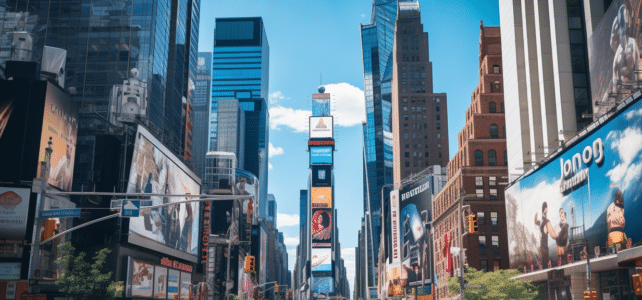
On the vast global chessboard, the metropolises bearing the letter ‘N’ shine with their cultural, economic, and historical diversity. From New York to Nairobi, passing through Naples and Nagoya, these cities embody nerve centers of global dynamism. Each has its distinctive imprint, shaped by centuries of evolution and innovation. These urban agglomerations are melting pots of contemporary trends, where the vibrancy of modernity mingles with respect for traditions. Exploring these cities means understanding how they uniquely contribute to the socio-economic and cultural fabric of their respective regions and beyond.
Metropolises in N: New Challenges and Urban Dynamics
Metropolises are situated in a geography increasingly marked by globalization and metropolization. On a global scale, urban agglomerations like New York, Nagoya, or any capital starting with N, continue to see their populations grow, sometimes reaching tens of millions of inhabitants. This phenomenon of demographic growth, combined with the expansion of command functions, gives these cities a pivotal role in the global economy. Business centers abound, testifying to their power in the network of global cities.
This growth of metropolises brings challenges to be met: densification, resource management, social and environmental cohesion. Global metropolises, as engines of innovation and economic growth, must also play a leading role in adapting to the new realities of globalization. Organizations such as United Cities and Local Governments (UCLG), which represents 70% of the global population, act as spokespersons for cities to major international bodies, thus promoting the sharing of best practices and the implementation of sustainable urban policies.
International cooperation, facilitated by bodies such as the International Association of Francophone Mayors (AIMF) or the Delegation for the External Action of Local Authorities (DAECT), allows metropolises to engage in a dynamic of exchange and international solidarity. Cities thus enter into strategic partnerships, benefiting from cross-financing for large-scale urban projects. These collaborations are crucial to addressing contemporary challenges such as ecological transition, social inclusion, and smart urban planning.

Focus on Cities in N: From Nairobi to New York, Diversity and Specificities
The urban spectrum extends from Nairobi, the bustling Kenyan capital, to New York, the epicenter of global hyperactivity. While Nairobi stands out for its economic dynamism and its role as a regional hub for East Africa, New York represents the archetype of the world city, home to the UN and the beating heart of finance, culture, and innovation. Each metropolis, at its scale, illustrates a unique facet of contemporary urbanization, from the challenges of demographic growth to sustainability issues.
National and international laws shape the development and autonomy of these cities. The Orientation Law No. 12–125 in France paves the way for decentralized cooperation, while the Oudin-Santini and Thiollière laws expand the financial and competitive framework for local authorities for external actions. In this legislative ecosystem, cities like Nairobi benefit from a new maneuvering space for their expansion and international projects.
At a time of standardization of municipal policies and territorial marketing, metropolises in N seek to distinguish themselves. City diplomacy proves to be a key vector for addressing transnational challenges. The dissemination of best practices and the creation of a strong urban brand contribute to the economic attractiveness and international visibility of cities, from Nairobi to New York.