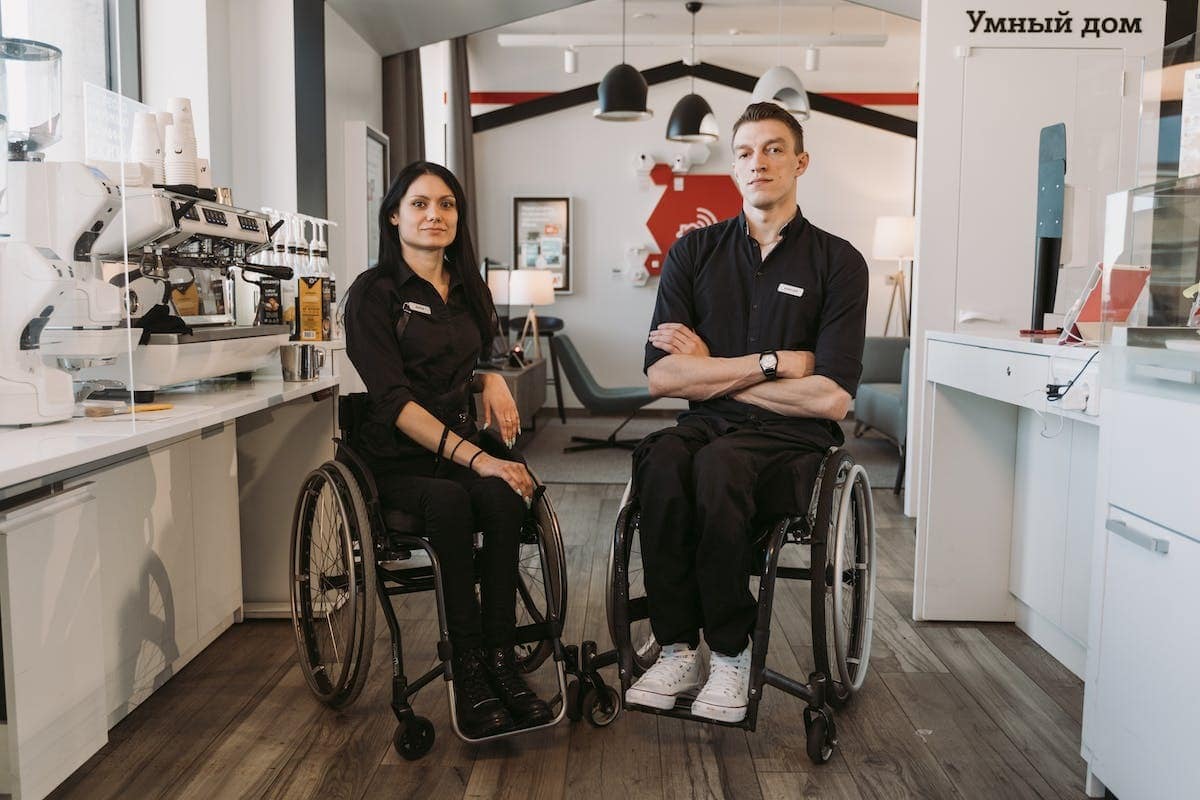
In the field of modern architecture, inclusion and accessibility are increasingly dominant themes. The establishment of new standards to improve restroom accessibility for people with reduced mobility in 2020-2021 is a clear example. These standards, set by government agencies and advocacy groups, aim to facilitate the daily lives of those who have difficulty moving by ensuring that public sanitary facilities meet their needs. They represent a significant advancement in the fight for equal rights and non-discrimination.
Accessible Restroom Standards: Current State of Accessibility
The main developments of the ‘2021 Accessible Restroom Standard’ are at the heart of current discussions on accessibility. As part of these recent regulations, the responsible organizations have taken into account feedback and the specific needs of people with reduced mobility to improve the design and use of sanitary facilities.
A particular emphasis has been placed on space in this new 2021 Accessible Restroom Standard. Indeed, sufficient space must be provided to allow wheelchair users to move easily and freely within the restroom. This also includes adequate space in front of the sink as well as around the toilet bowl to ensure optimal maneuverability.
The ‘2021 Accessible Restroom Standard’ now mandates a standard height for accessible sinks. They must be positioned at a height that facilitates use by all individuals, regardless of their height or physical abilities.
Another important requirement concerns the mandatory inclusion of a side grab bar near the toilet bowl. This directive primarily aims to enhance safety and promote greater autonomy during the transfer from the wheelchair to the toilet.
With the shift towards greater hygiene, certain automatic systems such as touchless faucets or automatic flushes are now deemed essential according to this new ‘2021 Accessible Restroom Standard’. These measures aim to address the practical needs of users with physical disabilities while also significantly minimizing any potential contamination.
However, it is crucial to note that these new directives pose certain challenges, particularly financial and logistical, for many existing public establishments as they often require significant, if not costly, modifications to existing facilities.
Despite this, it is important to remember that these adaptations greatly benefit everyone: families with strollers or elderly individuals can fully enjoy the comfort offered by these new provisions.
The effective implementation of the new ‘2021 Accessible Restroom Standard’ thus constitutes a major step towards greater social inclusivity. The collective efforts to ensure easy access to public restrooms reflect a strong societal will to meet the needs of everyone in publicly accessible spaces without any discrimination or exclusion.
New Accessible Restroom Standards: What Changes in 2020-2021
Compliance with the new 2021 Accessible Restroom Standards represents a real challenge for many establishments. Indeed, this often requires significant work and sometimes costly renovations to adapt existing facilities to the new requirements.
The first challenge faced by establishments is budget-related. The necessary modifications can be expensive, especially if they involve a complete renovation of the restrooms or the purchase of new accessible equipment. Some establishments have limited budgets and must therefore find creative solutions to comply while respecting their financial constraints.
Another major challenge concerns logistics. Implementing the required adaptations can lead to temporary interruptions in the use of the affected restrooms. This can be problematic in highly frequented places where functional sanitary facilities are needed. Managers must therefore carefully plan these works to minimize inconvenience for the public.
Some establishments also face difficulties related to their existing architecture. It is not always possible to easily adapt spaces to meet the specific criteria of the new 2021 Accessible Restroom Standard. For example, some historic buildings have structural constraints that complicate any major modifications without affecting the integrity of the site.
The lack of awareness and training also constitutes a significant challenge in complying with the new 2021 Accessible Restroom Standards. Establishment managers must ensure that all staff are aware of the new requirements and are able to apply them correctly. This includes training on the use of accessible equipment, as well as raising awareness of respecting the dignity and privacy of people with reduced mobility.
Despite these challenges, it is essential for establishments to make every effort necessary to comply with the new 2021 Accessible Restroom Standards. This not only helps improve accessibility and comfort for people with reduced mobility but also promotes a more inclusive society where everyone has equitable access to public spaces.
Compliance with the new 2021 Accessible Restroom Standards represents a financial, logistical, and architectural challenge for many establishments. It reflects a collective will to improve accessibility and foster greater social inclusion. We must ensure that managers take all necessary measures to comply with the new requirements and provide easy and respectful access for all.
Accessible Restroom Compliance: A Challenge for Establishments
The new 2021 Accessible Restroom Standards aim to create a more inclusive society by offering improved accessibility for all. This approach presents numerous advantages, both for people with reduced mobility and for the entire population.
Increased accessibility allows people with reduced mobility to fully participate in social and economic life. By providing adapted facilities, establishments promote their autonomy and strengthen their integration into society. They can thus more easily access public places, shops, or administrative services.
Better accessibility contributes to the overall well-being of everyone. Specific equipment such as lowered toilets or grab bars is also useful for elderly individuals or those temporarily needing physical assistance. A person who feels safe and comfortable when using public restrooms is likely to have a positive impression of the establishment where they are located.
Improved accessibility also benefits families with young children or strollers. Spacious and functional areas facilitate diaper changes and meet the specific needs related to early childhood.
This approach is part of a broader environmental perspective. Indeed, through these new 2021 Accessible Restroom Standards committed to greater ecological sustainability (lower water consumption, use of environmentally friendly materials), establishments contribute to reducing environmental impacts and encourage responsible resource management.
Providing improved accessibility for all also enhances the image and reputation of establishments. People with reduced mobility may remain loyal to businesses that care about their well-being and are sensitive to their specific needs. Therefore, by adhering to the 2021 Accessible Restroom Standards, establishments can attract a broader and more diverse clientele.
Improving accessibility according to the new 2021 Accessible Restroom Standards presents significant benefits both socially and economically or environmentally. By fostering a more inclusive society where everyone can easily access all public spaces, these measures create an environment conducive to sharing and harmonious coexistence. It is important to fully embrace this evolution to provide easy and inclusive access for all.
Improved Accessibility: Benefits for All
Beyond the social and economic benefits, the new 2021 Accessible Restroom Standards also have a significant impact on the safety and comfort of users. Indeed, these devices offer better shock resistance and increased stability due to the use of robust materials such as stainless steel.
Restrooms for people with reduced mobility are ergonomically designed to ensure maximum comfort. The seats are padded and height-adjustable to meet individual needs. Strong grab bars are also installed to provide additional support during transfers or sitting.
The new 2021 Accessible Restroom Standards take into account international recommendations regarding available space in stalls. They ensure sufficient surface area to allow a person in a wheelchair to maneuver easily without feeling confined.
Regarding access to sanitary facilities, establishments must now provide an adapted ramp or an elevator to ensure vertical accessibility. This sometimes requires significant structural modifications but allows for a smooth and secure experience for people with reduced mobility.
It is important to note that these new standards apply not only to public buildings but also to those in the private sector such as hotels, restaurants, and shops. It is essential to install equipment adapted for people with reduced mobility, as they promote their active participation in daily life while providing comfort and safety. This positive evolution, however, requires a collective effort from all establishments to fully realize the goal of a truly inclusive society.