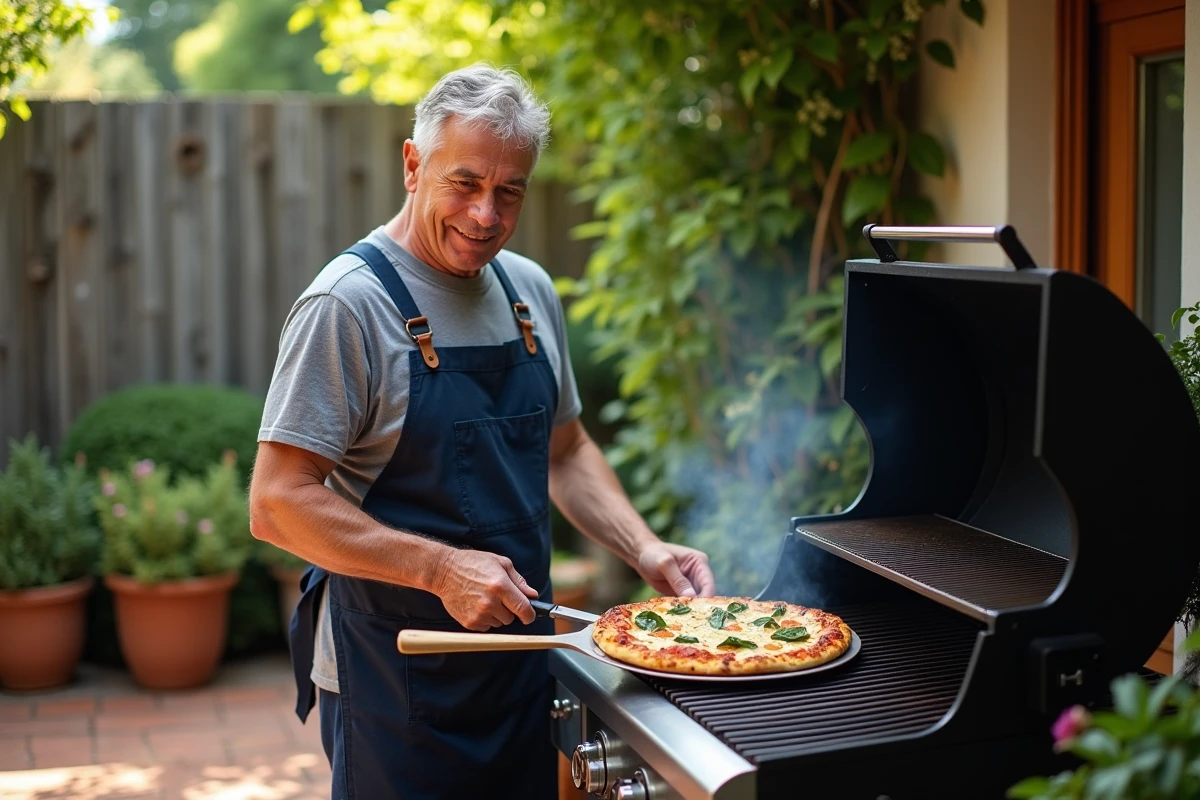
Direct grilling without a refractory stone produces a technically different pizza than that obtained in a deck oven. The crust rests on metal bars heated to high temperatures, generating localized Maillard marks and a striped texture that is impossible to replicate otherwise. Understanding this specificity allows for adjustments in the dough, toppings, and heat management instead of trying to imitate a Neapolitan oven.
Heat management on direct grill: zones and lid
The success of a pizza on the barbecue without a stone relies on a single parameter: mastery of indirect heat combined with the convection of the lid. On a charcoal or gas barbecue, we recommend creating two distinct zones. The first, over high heat, sears the dough from below. The second, without a direct heat source, receives the pizza once flipped to melt the toppings.
Keeping the lid closed transforms the barbecue into a convection oven. Without it, the ambient temperature drops too quickly, and the cheese remains gooey while the bottom burns. Open the lid only to flip the dough or add toppings, then close it immediately.
On a Weber-type gas barbecue, light the burners on one side at full power and leave the other side off. On a charcoal model, gather the coals on one half of the bowl. This configuration allows you to cook a pizza on the barbecue without a stone with precise browning control.
Electric barbecue and crispy pizza: the overlooked parameter
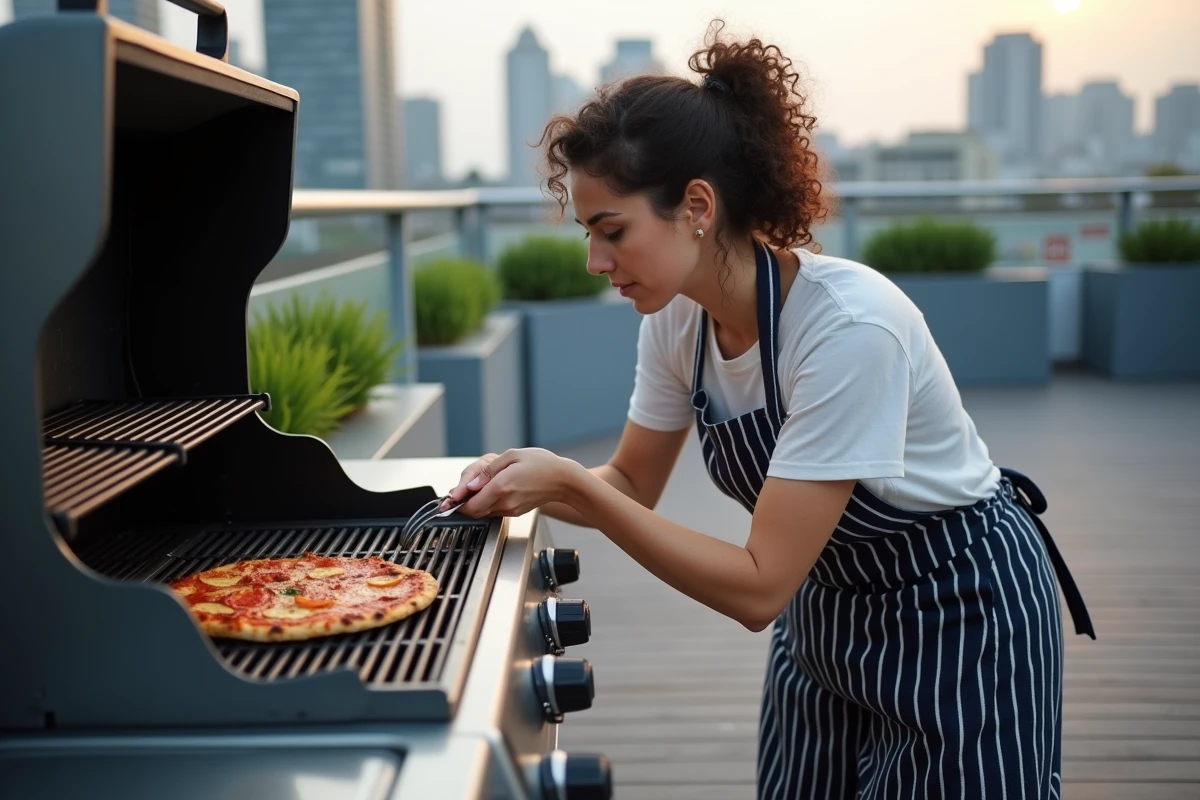
Electric barbecues pose a problem that most guides do not address: their heating element typically does not reach the temperatures achieved by a gas or charcoal model. The crispiness of the dough suffers as a direct result.
Preheating the grill to maximum for about fifteen minutes before placing the dough is the first adjustment. On a lid-equipped electric barbecue, this temperature rise allows the grill itself to become the searing surface, partially compensating for the ambient thermal deficit.
Two additional adjustments make a difference:
- Lightly oil the dough side that will touch the grill with a high smoke point oil (refined sunflower, grapeseed) to accelerate heat transfer by conduction and achieve a marked crispiness without sticking.
- Roll out the dough thinner than usual, around a few millimeters thick, so that the heat passes through quickly and avoids the syndrome of dough cooked outside but raw inside.
- Reduce the toppings to the strict minimum: less cold mass to heat means a shorter cooking time and a crust that remains crispy instead of softening under the steam from vegetables.
Enamelled cast iron grills, increasingly common on newer models, store heat better than chrome-plated steel grills. If your electric barbecue is equipped with one, the result is significantly closer to gas cooking.
Dough preparation suited for the grill
Dough designed for a conventional oven is not suitable as is for the grill of a barbecue. Direct contact with the bars requires a firmer, less hydrated dough that does not flow between the gaps when placed.
We work with a moderate hydration rate. A dough that is too soft, like a high-hydration Neapolitan style, collapses and sticks to the bars before it has a chance to sear. Adding a drizzle of olive oil directly into the dough strengthens its structure and promotes crispiness.
Rolling out the dough on a floured surface and then placing it on a board or pizza peel facilitates the transfer to the hot grill. The movement must be quick and assured: hesitating causes a collapse in the middle and uneven cooking.
Fine semolina flour sprinkled under the dough acts as a natural ball bearing. It prevents sticking on the peel and burns quickly upon contact with the grill without leaving a bitter taste.
Cooking sequence and toppings: the right order
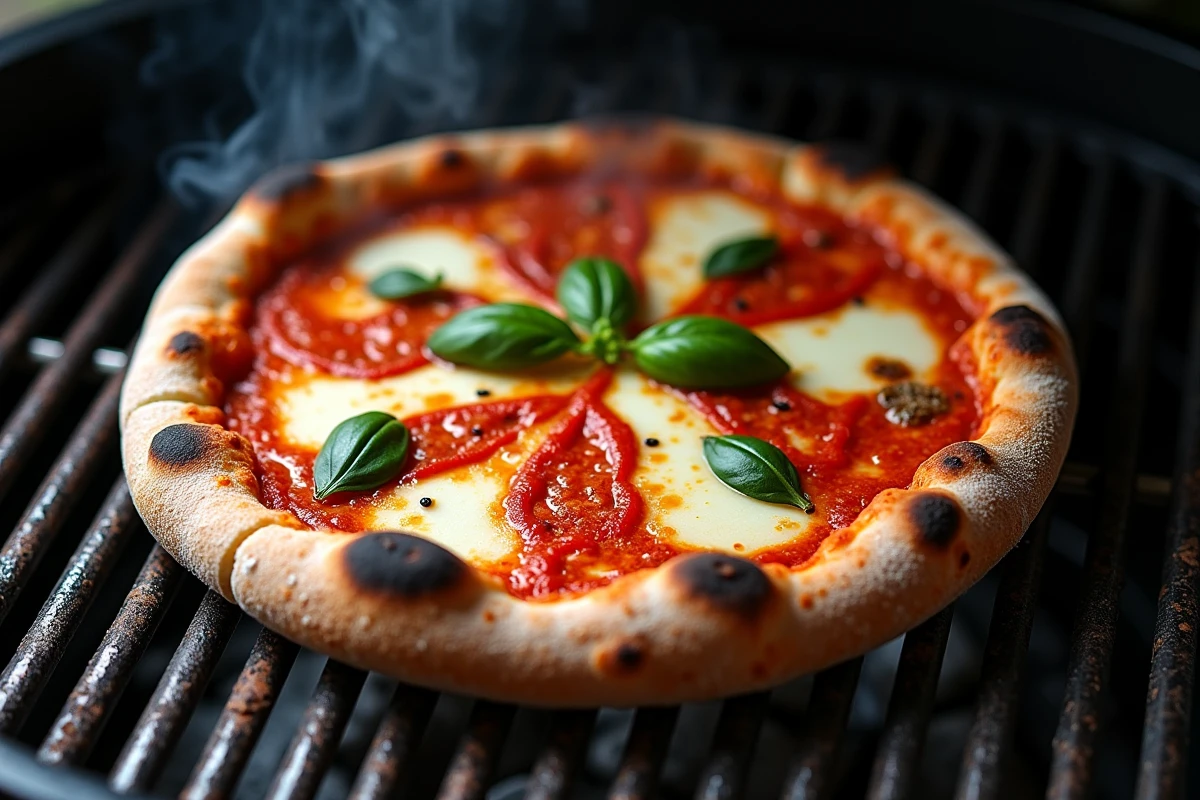
The most reliable method is to cook the dough alone at first. Place the dough disc directly on the oiled grill, with the smoothest side facing down. Close the lid. After a few minutes, bubbles will appear on the surface, and the underside will show golden marks.
Flip the dough with a wide spatula or a peel. This is the precise moment to add the toppings: tomato sauce, cheese, vegetables, charcuterie. Close the lid again and let the convection melt the cheese while the second side cooks.
Never top the dough before the first cooking on the grill. The weight of the cold toppings prevents the dough from rising, the juice from the vegetables soaks the base, and the cheese burns before the crust is ready.
Some guidelines for the toppings:
- The tomato sauce should be applied in a thin, almost transparent layer to limit moisture input on a dough that does not have the thermal mass of a stone deck to absorb it.
- The mozzarella should be torn into irregular pieces rather than cut into uniform slices, which speeds up melting and creates contrasting gratin areas.
- High-water content vegetables (zucchini, fresh tomato) should be pre-cooked or used in reduced quantities to avoid turning the pizza into a steam bath under the lid.
Technical errors that ruin cooking without a stone
A non-preheated grill remains the most common mistake. A cold grill instantly sticks the dough, and no amount of oil can fix the problem. Long preheating, with the lid closed, is the non-negotiable prerequisite.
Another common pitfall: lifting the lid too often. Each opening drops the temperature in the cooking chamber and lengthens the total time, which dries out the toppings while leaving the dough soft. No more than two openings per pizza: one to flip, one to check the final cooking.
Using parchment paper on the grill seems logical to prevent sticking, but it is counterproductive. The paper prevents direct metal-dough contact, removes grill marks, and creates a barrier that blocks heat rise. It is better to invest a few seconds in properly oiling the grill with a cloth soaked in oil held by tongs.
Cooking pizza on the barbecue without a stone rewards rigor in three areas: preheating, the sequence of dough-then-toppings, and discipline in keeping the lid closed. The rest is a matter of personal choice regarding ingredients.