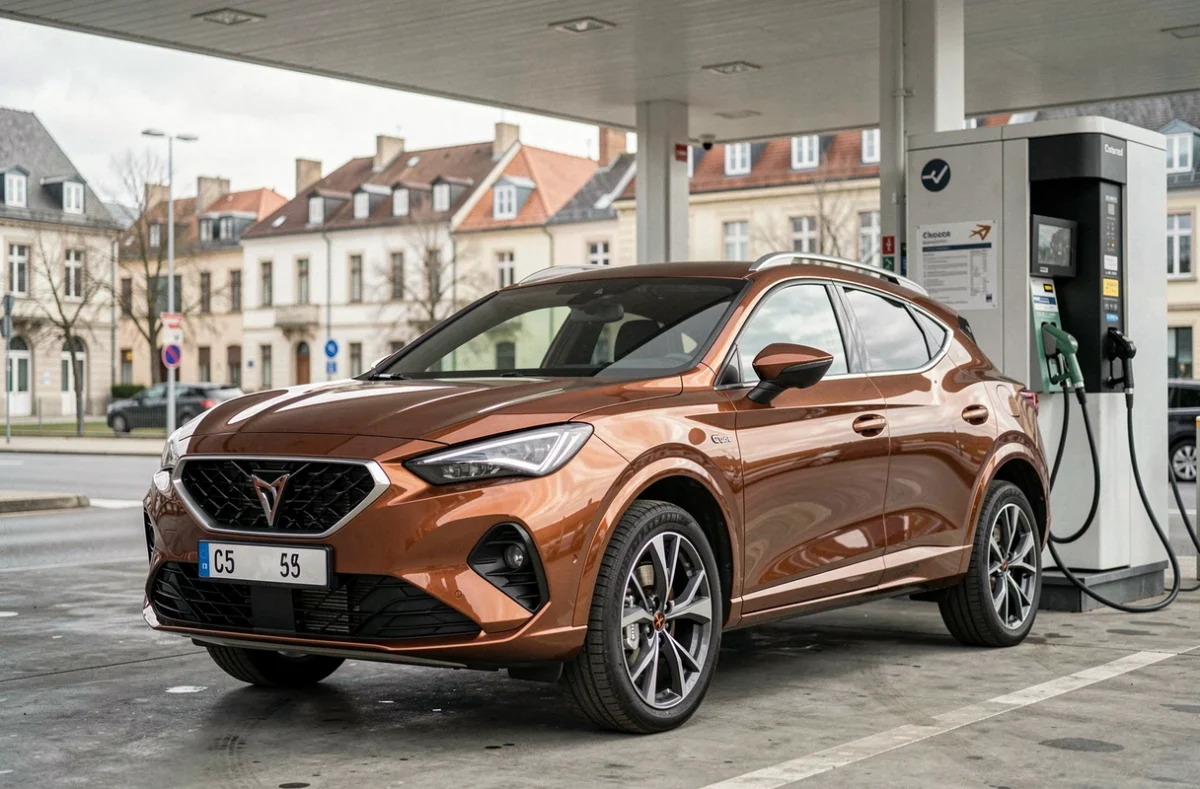
A Cupra Formentor 1.5 TSI 150 hp listed at 6.2 L/100 km in the technical specifications can easily reach 8 L/100 km in real-world driving. Over a year and 15,000 km, that difference adds up to several hundred euros in extra fuel costs. Understanding where the gap comes from, and especially how it varies depending on the engine you choose, helps you set a realistic fuel budget before buying.
Formentor WLTP vs. real-world fuel consumption: why the gap widens
The WLTP standard measures fuel consumption under controlled conditions: regulated temperature, standardized vehicle weight and a predefined speed profile. On the road, air conditioning, terrain, driving style and average speed all make a difference.
For the 245 hp Formentor VZ 2.0 TSI, official fuel consumption is around 8.8 L/100 km. User data compiled by Spritmonitor puts average real-world consumption at 8.7 L/100 km, with figures ranging from 4.81 to 13.51 L/100 km depending on the driver. The gap depends mainly on the type of journey and how heavily you use the accelerator.
One detail often overlooked when assessing the Cupra Formentor’s real-world fuel consumption: entry-level versions perform better than expected. The 150 hp 1.5 TSI with automatic transmission averages around 7.17 L/100 km in real-world driving, while the manual version drops to 6.88 L/100 km. For the 150 hp 2.0 TDI diesel, figures average around 6.44 L/100 km.

Annual Cupra Formentor fuel costs by engine
How many kilometres do you drive each year? That’s the first question to ask, even before comparing engines. A driver covering 10,000 km won’t face the same bill as someone who drives 25,000 km.
150 hp TSI petrol: the popular middle ground
With real-world consumption close to 7 L/100 km with the automatic transmission, this engine uses around 70 litres per 1,000 km. Local fuel prices matter more than the national average. Prices can vary by several cents from one area to another.
Using the price at the station you usually visit gives you a much more reliable estimate than calculating based on a national average.
150 hp TDI diesel: cost-effective for long journeys
Diesel remains available in the range and retains an advantage on motorways. With average real-world consumption of around 6.44 L/100 km, it uses less fuel by volume. Diesel prices fell in early November 2026, but remained higher than before the conflict in the Middle East. A budget based on a single price check can quickly become outdated.
150 hp 1.5 eTSI mild hybrid: somewhere in between
This version pairs a small electric motor with the 1.5 TSI engine. Its combined WLTP fuel consumption is listed at between 5.8 and 6.3 L/100 km. There’s no need to plug it in and no special requirements: the system recovers energy when braking and assists the combustion engine when accelerating.
The mild hybrid is a good fit for drivers who want to reduce fuel consumption without changing their habits. There’s no need to think about charging; the savings happen automatically.
Plug-in Formentor e-HYBRID: when does it become cost-effective?
The 1.5 e-HYBRID has a WLTP fuel consumption figure of 1.4 L/100 km. This figure is misleading: it assumes the battery is charged before every journey and that electric range covers a significant part of the trip.
In practice, it all depends on how often you charge. Do you charge at home every evening and drive less than 50 km a day? Petrol consumption will remain very low, and the cost per kilometre will be driven mainly by the price of electricity. Do you forget to charge or regularly make long journeys? The combustion engine takes over, and fuel consumption rises because of the battery’s extra weight.
Here are the factors that determine whether the e-HYBRID is genuinely cheaper to run than a petrol or mild-hybrid Formentor:
- Average daily distance: if it stays within the battery’s electric range, most kilometres are driven in zero-emission mode, at a low cost
- Whether you can charge at home or at work: charging at a public fast-charging station costs significantly more than using a domestic socket during off-peak hours
- The PHEV’s purchase-price premium over the petrol version: this difference must be recouped through fuel savings over the ownership period
- The local price of electricity compared with the price of SP95-E10: the ratio between these two costs is what tips the balance
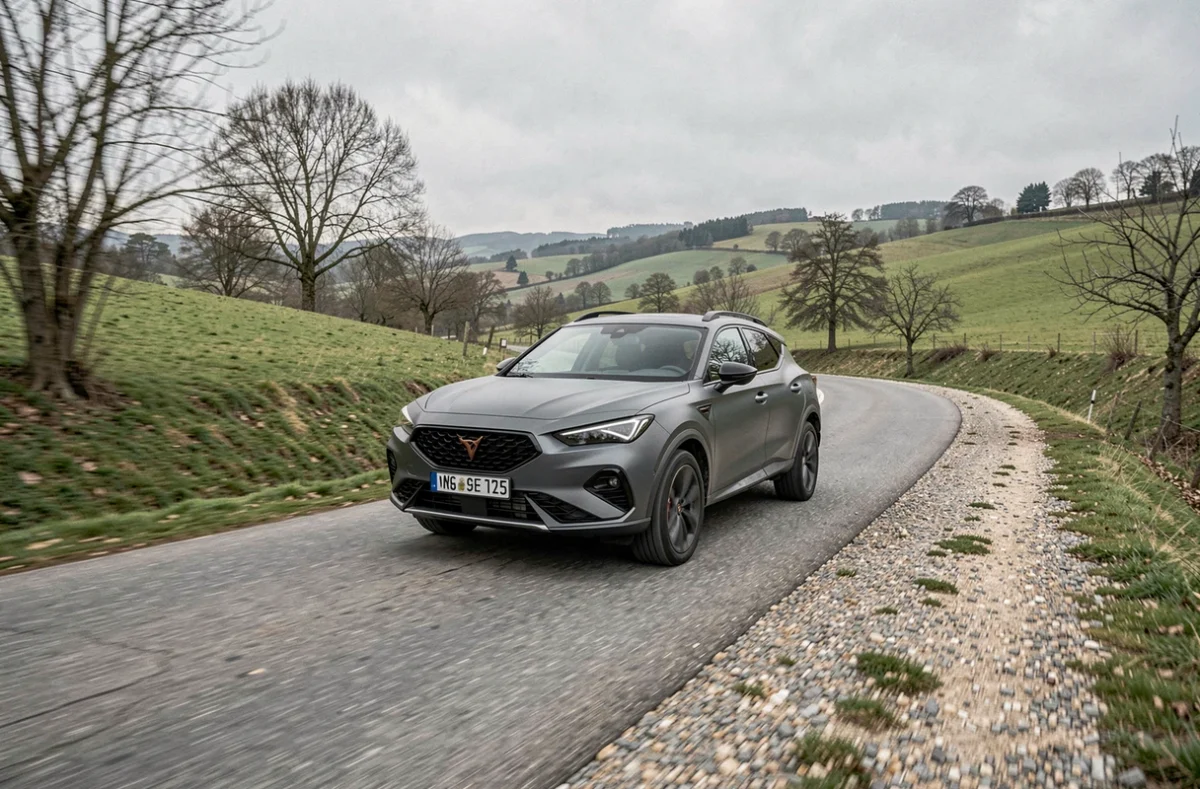
A driver who charges daily and mainly drives in town or suburban areas will reach the break-even point sooner. Conversely, mostly motorway driving without regular charging makes the e-HYBRID less cost-effective than a straightforward eTSI mild hybrid.
Pump prices and realistic estimates: pitfalls to avoid
Online calculators often estimate annual costs using an average fuel price and standard mileage. These estimates give you a rough idea, but two mistakes are common.
The first is using a national average price when differences between stations can exceed ten cents per litre. Public fuel-price data, updated regularly, lets you compare stations near you. Using the price at your usual station gives you a more accurate budget.
The second is failing to account for seasonal variations. Fuel prices fluctuate throughout the year. A calculation made in November won’t necessarily reflect the average cost over twelve months. It’s better to work with a range than a single figure.
Choosing a Formentor engine comes down to three practical factors: annual mileage, the types of journeys you make most often, and whether you can charge regularly if you choose the plug-in hybrid. An eTSI mild-hybrid Formentor averaging 6 L/100 km in real-world driving suits most needs without any extra hassle. The e-HYBRID only comes out ahead if you charge consistently every day and mostly make short journeys.