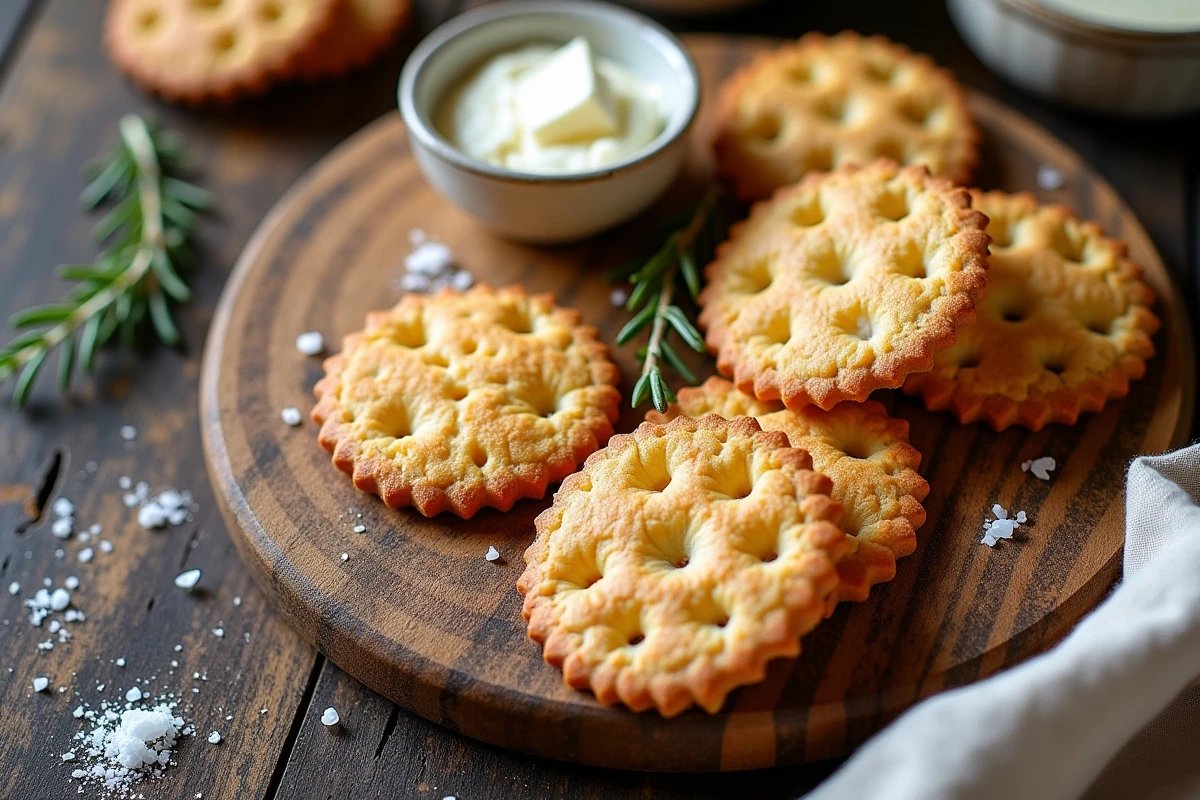
When you take a craquelin out of the oven and it doesn’t crack under your teeth, you know something has gone wrong. This Breton biscuit, halfway between a puffed bread and a dry biscuit, relies on a precise action during kneading and a cooking process that cannot be approximated. The craquelin, originating from the Rance region between Ille-et-Vilaine and Côtes-d’Armor, requires few ingredients but a rigorous execution.
The dough of the Breton craquelin: what happens before baking
The majority of failures come from the preparation of the dough, not the oven. The traditional craquelin uses wheat flour, butter, eggs, and yeast. There are also versions made with natural leaven, developed by artisans in Saint-Malo and Dinan since the late 2010s, which improve digestibility and reduce additives.
The classic trap is to over-hydrate the dough. The dough must remain firm and smooth after kneading, without sticking to your fingers. If it is too soft, the craquelin rises poorly and collapses when taken out of the oven. The butter is worked at room temperature to incorporate it without forcing, and kneading continues until a homogeneous texture is achieved, neither elastic nor crumbly.
For those looking for a detailed recipe for homemade Breton craquelins with exact proportions, the shaping step deserves as much attention as mixing the ingredients: small, regular discs are formed, not too thick, to ensure even baking.

Baking the craquelin: temperature and duration that change everything
The Breton craquelin goes through a two-step process that online recipes often summarize too quickly. First, the dough is traditionally scalded in hot water before being plunged into cold water, a technique described as early as 1607 in the “Thrésor de santé”. This step gives the biscuit its characteristic airy structure.
Scalding distinguishes the craquelin from a simple dry biscuit. Without this hot water step, you end up with a dense sablé, not that puffed texture that cracks cleanly under the teeth. Some artisanal bakers have adapted the scalding times to compensate for rising energy costs, slightly shortening the hot bath while extending the drying time before baking.
In the oven, baking is done at a moderate temperature. An oven that is too hot browns the outside before the inside dries, resulting in a soft craquelin in the center. Feedback varies on this point depending on home ovens, but a convection heat is generally aimed for even distribution. Coloration is monitored: the craquelin should be golden blonde, never brown.
Variations of the Breton craquelin: savory, sweet, and modern versions
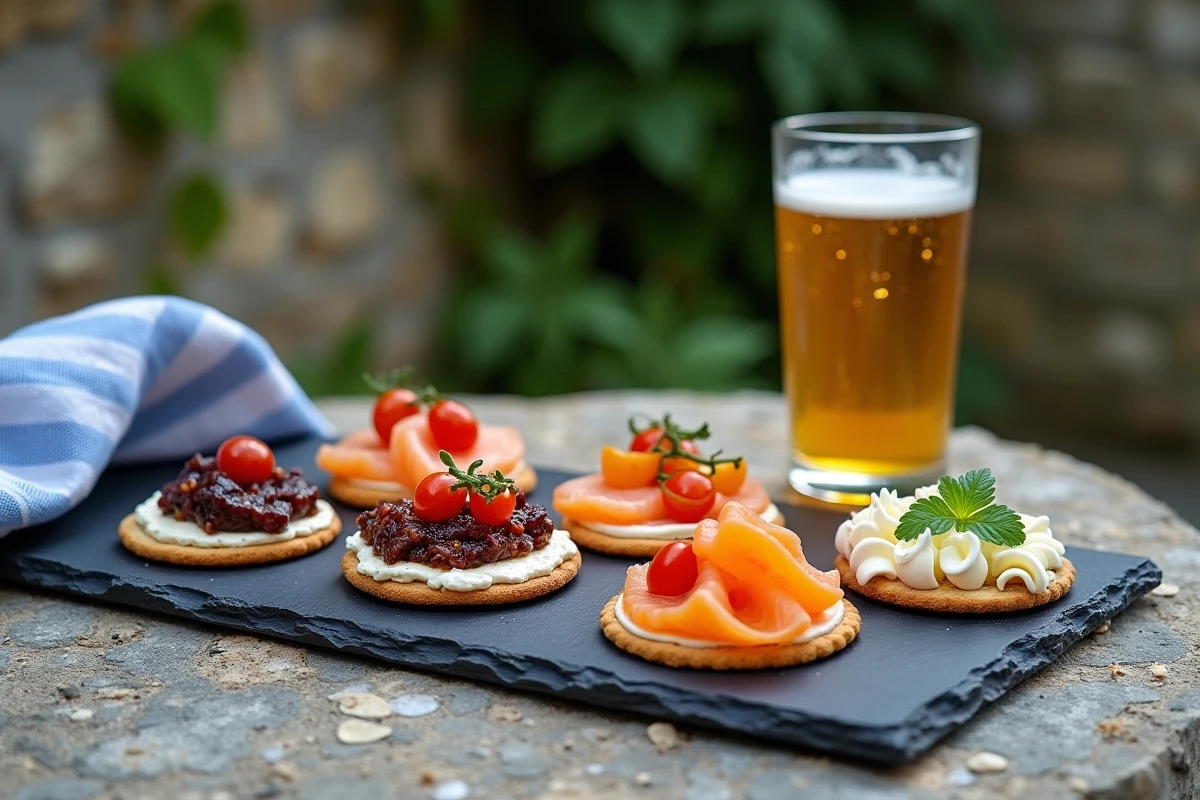
The craquelin comes in sweet or savory versions, showcasing the versatility of the Breton recipe. In the classic version, it is eaten plain or lightly buttered at breakfast. Topped with fresh cheese, pickles, or roasted vegetables, it becomes an appetizer base that social media has widely popularized in recent years.
Sweet craquelins with salted butter caramel
The most indulgent variant involves drizzling the craquelin with Breton salted butter caramel. The caramel is prepared separately and poured over the still-warm craquelins so that it adheres without sliding off. The caramel should be flowing but not liquid at the time of drizzling.
You can also directly incorporate sugar and salted butter into the dough to achieve a homogeneous sweet craquelin without filling. The flavor remains more subtle, less spectacular than the topping, but the texture gains in consistency.
Craquelins with seeds and alternative flours
In recent years, artisans and major brands have offered craquelins enriched with flax or sesame seeds, sometimes made with spelt or semi-whole flour. These versions target an audience attentive to fiber and salt content.
- Spelt flour: slightly nutty flavor, denser dough to work with, slightly longer baking time
- Golden flax seeds: added after kneading to avoid crushing them, they provide crunch on the surface
- Toasted sesame: to be sprinkled before baking, it sticks well on the dough moistened with a brush
Alternative flours modify the baking time and final texture. Semi-whole flour absorbs more water, which requires adjusting the hydration of the dough from the start.
Common mistakes in Breton pastry: the pitfalls of homemade craquelin
The same mistakes can be found in most failed attempts. Identifying them before starting saves time and ingredients.
- Butter too cold: it creates lumps in the dough and prevents even shaping. Take the butter out at least an hour beforehand
- Dough overworked after adding flour: gluten develops excessively, making the craquelin rubbery instead of cracking
- Irregular thickness of the discs: the thinner ones burn while the thicker ones remain soft. A rolling pin and a cookie cutter solve the problem
- Oven door opened during baking: the drop in temperature prevents puffing. Do not check before two-thirds of the baking time
The Breton craquelin can be stored for several days in an airtight container, provided it is completely cooled on a rack before storage. The slightest residual heat creates condensation that softens the biscuit within hours. A well-prepared craquelin retains its characteristic taste and texture much longer than a classic biscuit, making it a reliable companion from breakfast to dinner.